
What to Wear for Professional Headshots & Portraits: A Guide for Cleveland Professionals
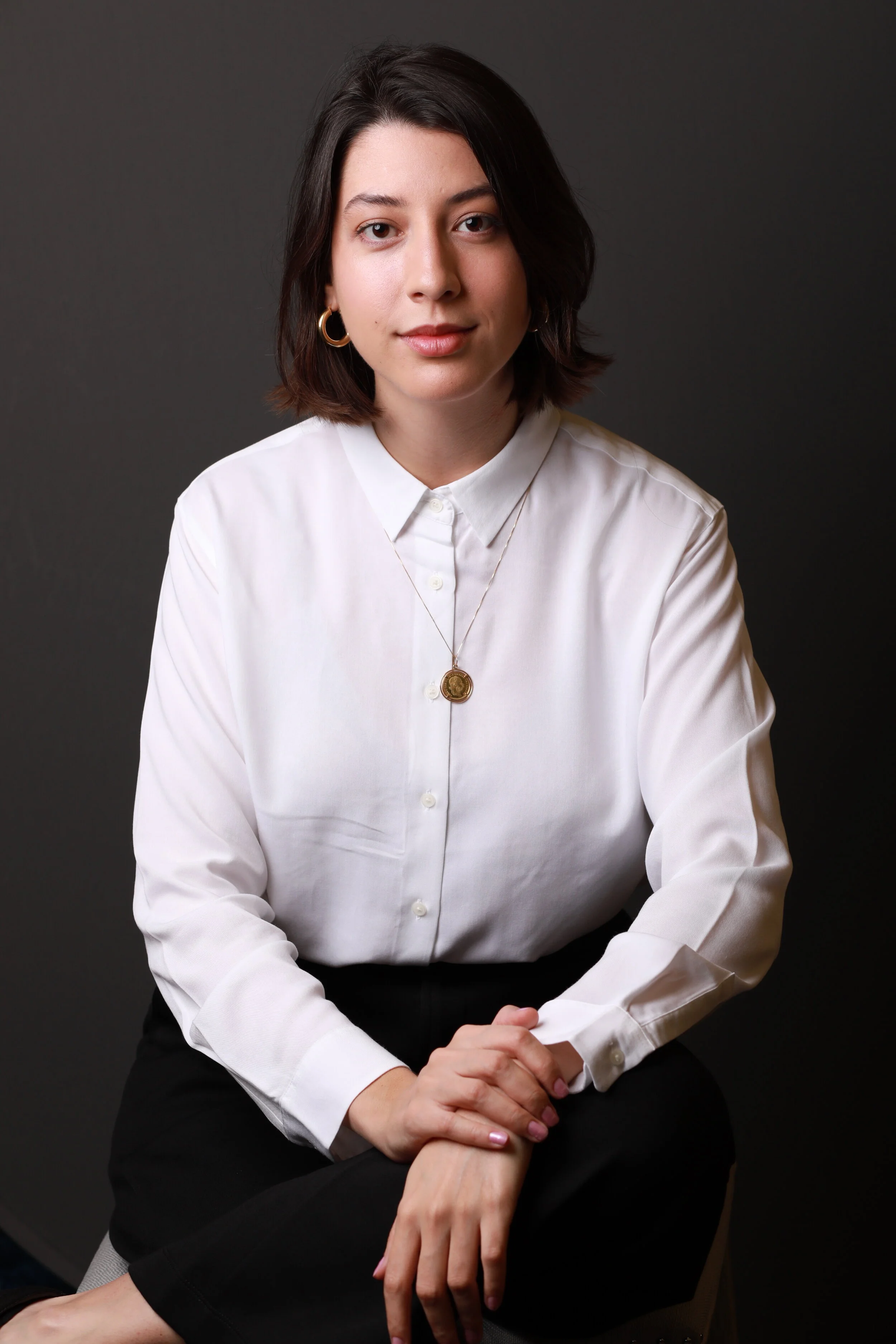
Your headshot has about two seconds to do its job. Before anyone reads your title, your bio, or your LinkedIn summary, they've already made a judgment based on your image. Most of that judgment isn't about your face — it's about what your clothing communicates.
That's not a photography problem. It's a brand and marketing problem. And it's one most people don't think about until they're standing in front of the camera.
Here's what actually matters — and what to skip.
Start with the right question
Before you open your closet, ask yourself: What do I need this image to communicate?
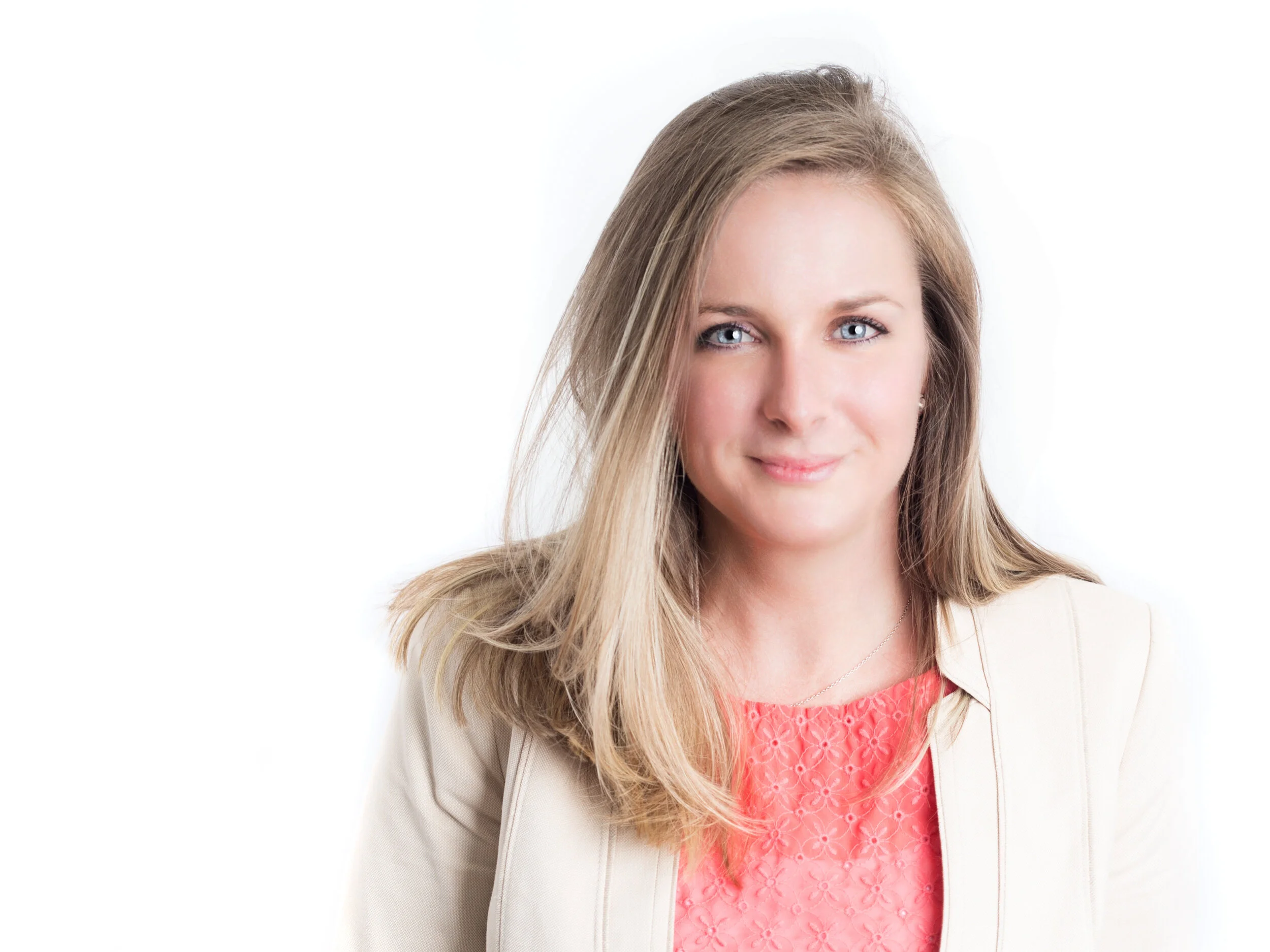
The answer should drive every decision you make about what to wear. A senior attorney at a Cleveland law firm has a different answer than a creative director at a marketing agency. A VP of HR has a different answer than a founder pitching investors. "Professional" isn't one look — it's a signal your clothing either sends or undermines.
If you're getting a headshot through your company, check with your HR or marketing team first. Many organizations have specific brand guidelines about attire, backdrop, and overall look for team headshots. Follow them.
If you're on your own, the guidance below will get you there.
The universal rules (these apply to everyone)
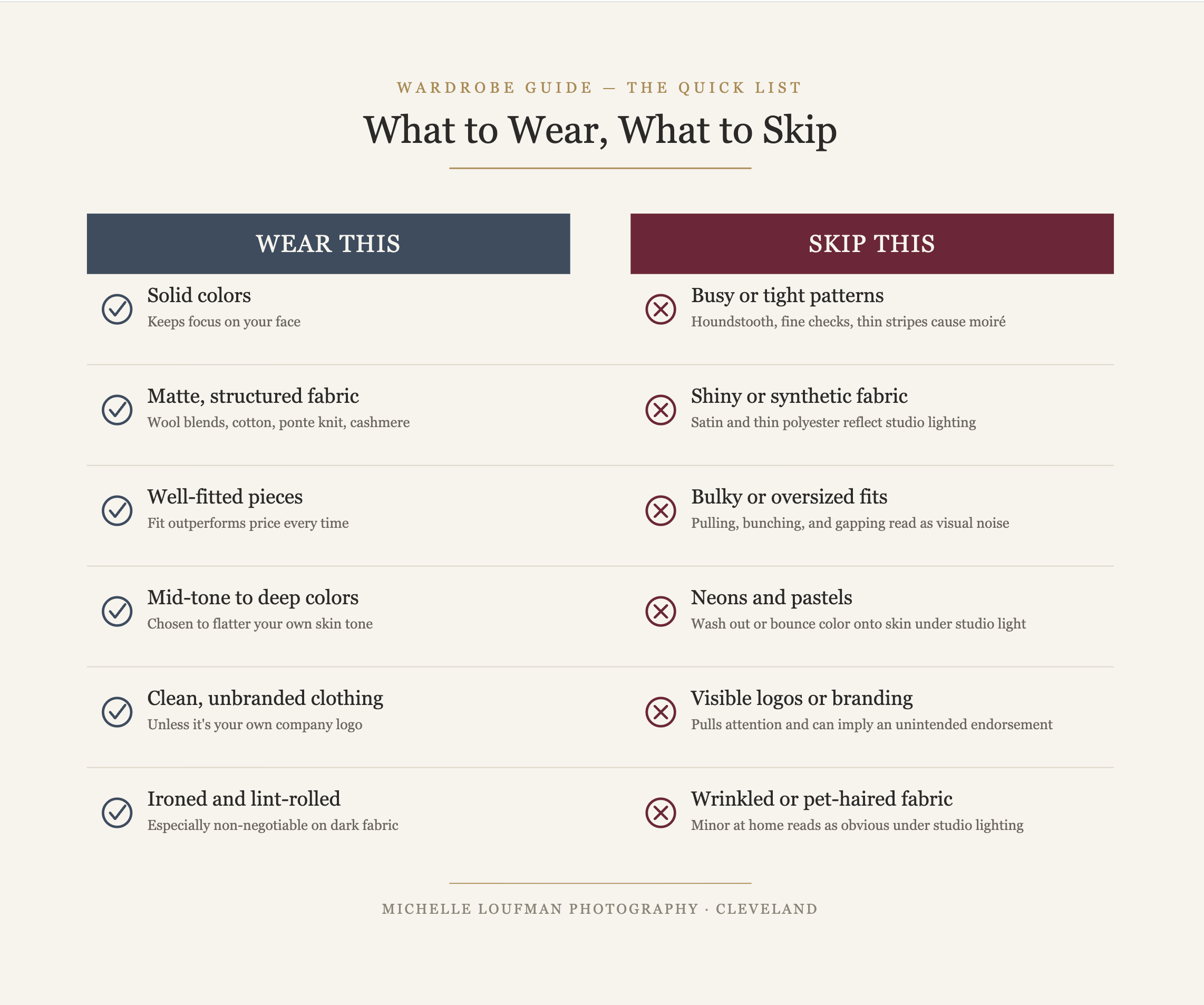
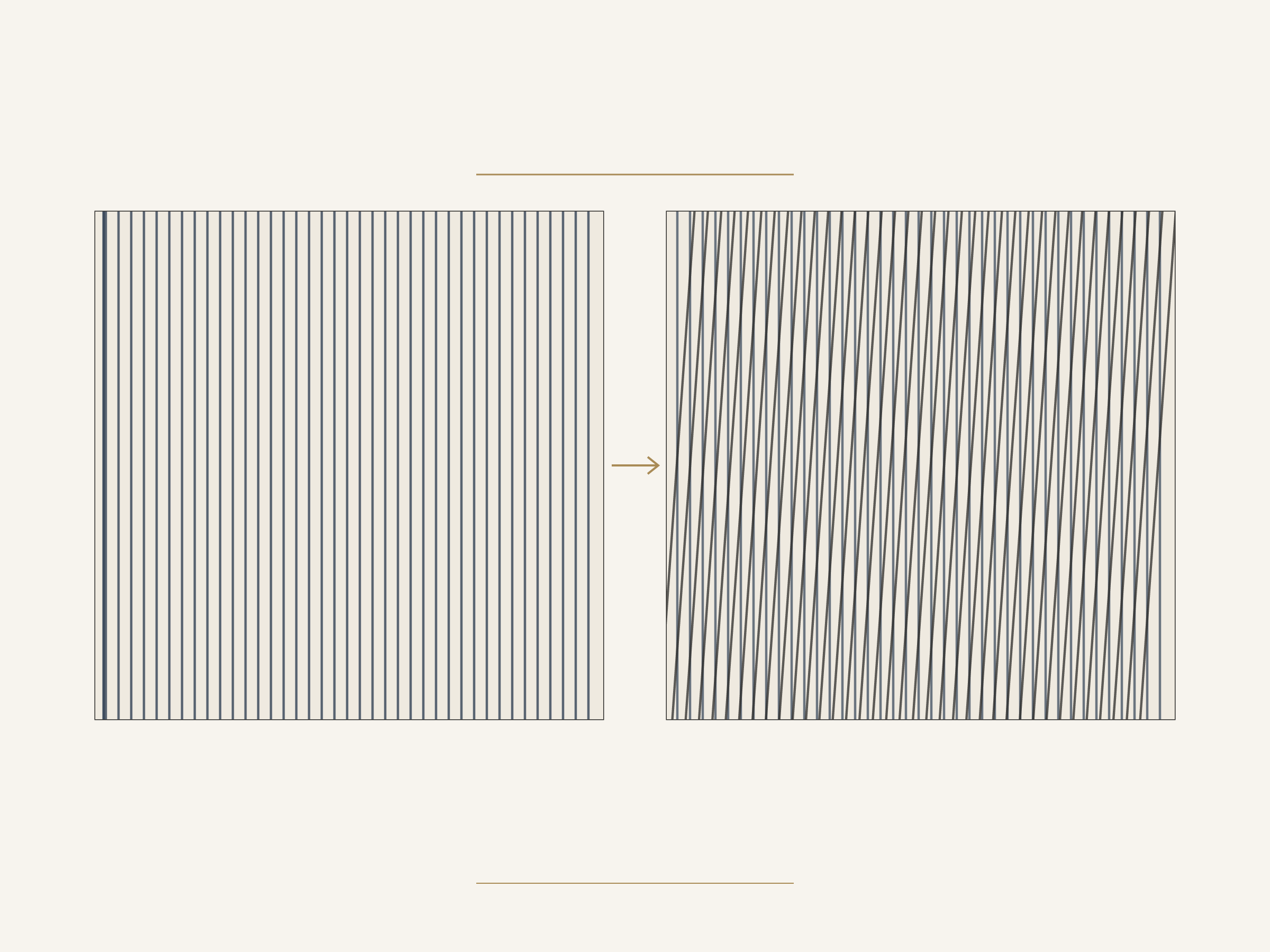
Solid colors tend to photograph best. If you like patterns, avoid very busy (heavy) patterns, exceptionally thin stripes, houndstooth, tight checks — they cause a visual distortion on digital cameras called moiré: a wavy, shimmering effect that cannot be removed in editing. Solids sidestep this entirely and keep the focus where it belongs — on your face. It’s ok to have some pattern, but overly tight, busy
Color palette matters more than trending fashion: Complement your skin tone based on your palette. Not sure how? This video can help you do your own color analysis at home. Neons, pastels, and even some neutrals either wash out or bounce color onto your skin under studio lighting. If this step feels like too much, the colors that consistently photograph well across skin tones are navy, charcoal gray, burgundy, forest green, slate blue, and deep plum. These tones absorb light evenly and read as polished without drawing attention away from you.
Fit matters more than trends and fashion. A well-fitted $40 top that’s designed for your body type will outperform an unflatteringly bulky $ 300 sweater every time. Fabric that pulls, bunches, or gaps around buttons, or accentuates a “food belly’ creates visual noise that editing can't fix. Try your outfit on at least a week before your session and check it in good light — not just a bathroom mirror.
Dress for your body type and learn more by watching this video.
Choose matte, structured fabrics. Satin, shiny polyester, and thin synthetic fabrics reflect studio lighting and create bright spots across the chest and shoulders. Wool blends, quality cotton, ponte knit, and cashmere hold their shape and photograph cleanly. Structure flatters more than fabric that hides.
No logos, no visible branding. Unless it's your company logo, skip it. A visible brand name on your clothing pulls attention away from your face — and depending on the brand, can create legal ambiguity about affiliation or endorsement.
Iron and lint-roll everything. Wrinkles that look minor in your mirror become obvious under high-resolution camera lighting. If you have pets, the lint roller is non-negotiable, especially with dark fabrics.
Bring options. Bring two or three outfits to your session. Colors that look great at home sometimes behave differently under studio lighting. Having a backup means you don't have to live with a choice that isn't working.
What headshot outfit guidance looks like in practice for your industry

For formal industries (law, finance, healthcare, corporate leadership): Classic business attire is your safest and strongest choice. For women, a structured blazer, tailored blouse, or a fitted dress in a deep or neutral tone. For men, a suit in navy, grey, or charcoal with a well-fitted dress shirt and tie.For corporate and enterprise roles (HR, marketing, operations, management): Business professional to business casual works well. A blazer or sport coat elevates a look without requiring full formal attire. Women can consider layering — a solid blouse under a jacket gives you options during the session.
For professional services, agencies, or creative fields: You have more room to express your brand personality, but "casual" still requires intention. A well-pressed button-down, a quality knit, or a blazer over a clean solid reads as approachable and current. A graphic tee or hoodie reads as unpolished, even if that's your daily uniform.
A note on wardrobe for women
The "what to wear" question is genuinely harder for women, and no guide can substitute for knowing your own body and personal brand. A few things that hold true regardless:
Necklines matter. The neckline is what frames your face in a tightly cropped image. V-necks and scoop necks are generally flattering across body types. Avoid anything that creates visual clutter near your face or draws the eye downward.
Sleeveless is a judgment call. Eyes are drawn toward lighter areas in photos, which means exposed arms and shoulders can pull focus from your face. Long sleeves or three-quarter sleeves create cleaner lines and read as more professional in most contexts. If you love sleeveless, bring a layer to your session for variety.
Avoid bulky, chunky, or "puff" fabrics. These add visual weight and can obscure your shape rather than flatter it. Structured, fitted clothing creates cleaner lines — even if it feels bolder when you put it on.
Solid, structured pieces photograph more confidently than draped or flowy ones. A fitted blazer, a classic blouse, or a tailored dress will hold up better under studio lighting than anything loose or oversized.
If you're unsure, our full prep guide for women goes into more detail on hair, makeup, and session-day logistics.
A note on wardrobe for men
The challenge for most men is calibrating formality. The fix is simple—aim for one level more formal than your daily default.
If you normally wear a button-down, bring a sport coat. If you normally wear a sport coat, bring a full suit. The camera and the context both reward the extra effort.
Classic suit colors — navy, grey, charcoal — are reliable for a reason. They photograph well, read as authoritative, and don't compete with your face. A well-fitted dress shirt and tie remain the clearest signal of professional polish.
For ties: avoid tight patterns (same moiré problem as clothing). Solid or textured silk in navy, burgundy, or deep green will photograph cleanly and add depth without distraction.
The full prep guide for men covers fit, grooming, and everything else you need before your session.
What your outfit is actually communicating
Here's the thing most wardrobe guides miss: this isn't really a style question. It's a communication question.
Your headshot goes on your LinkedIn profile, your company website, your speaking bio, your pitch deck. It shows up before you do in every professional context. What your clothing signals in that image — authority, approachability, precision, creativity, trust — is part of what people decide about you before a conversation ever starts.
That's the same logic behind any good brand and marketing decision. The visual does work. Make sure yours is doing the right work.
Ready to book your corporate headshot session in Cleveland? Get in touch — we'll walk you through the rest.
Michelle Loufman is a Cleveland commercial and corporate photographer with 20+ years of brand and marketing strategy experience. She photographs executive portraits, corporate teams, and business clients across Northeast Ohio.
